Dark Patterns Symbiosis Bright Patterns
Symbiosis ›

Forced Continuity and Cost transparency

How to Apply

  • Show a clear price breakdown of all costs (eg. cost of subscription)
Dark Pattern

Forced Continuity

Open →

Users are automatically charged for ongoing subscriptions after trials end, often without clear notice or easy cancellation.

Forced Continuity
Illustration
Forced Continuity subverts the user’s expectation that a subscription created in the past will not auto-renew or otherwise continue in the future, instead causing undesired charges, difficulty to cancel, or lack of awareness that a subscription is still active.

Contexts

  • checkout

Harmed Goals

  • financial
  • control
  • transparency

Sources

Bright Pattern

Cost transparency

Open →

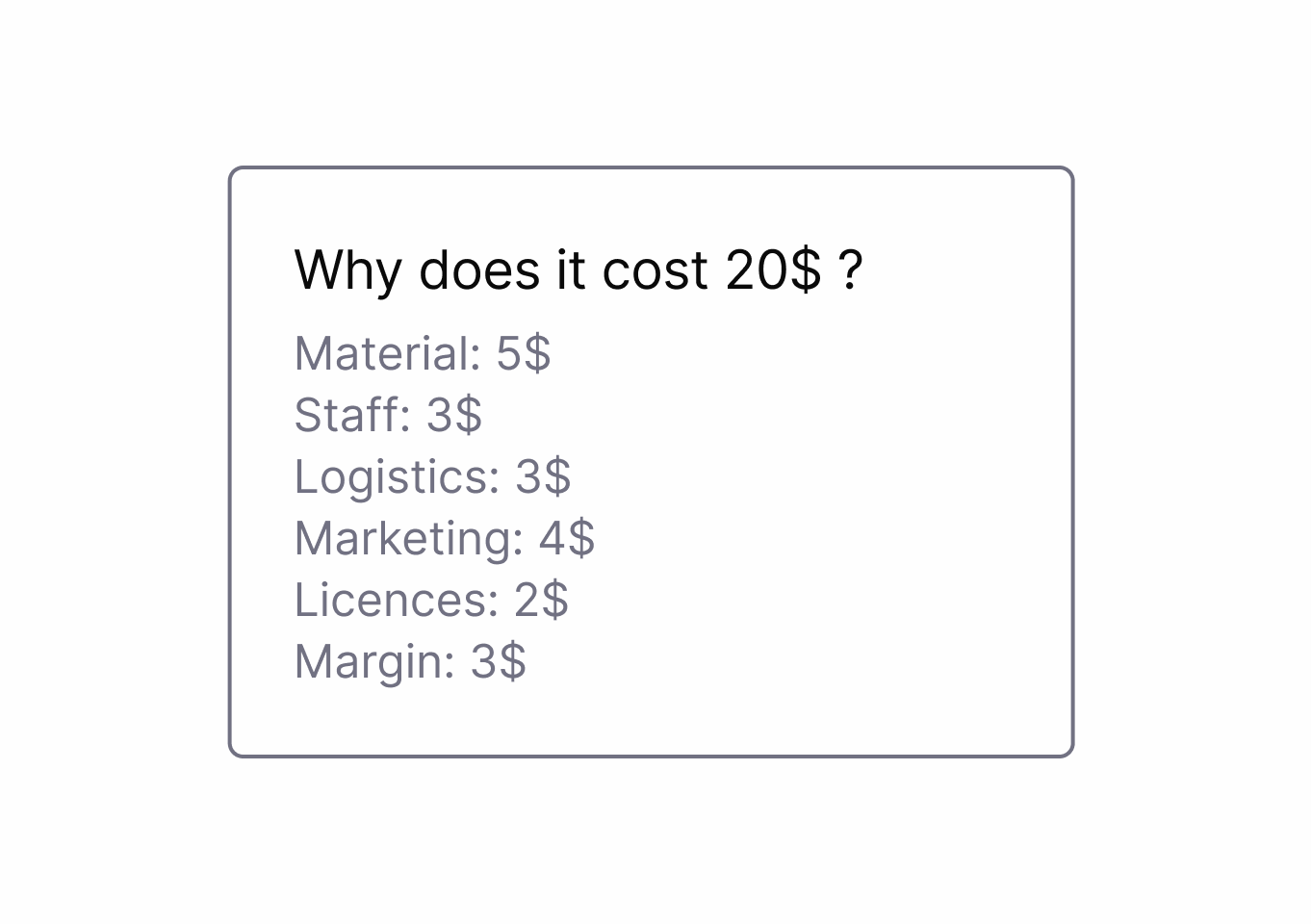
Shows detailed cost breakdowns respecting user curiosity and building trust.
Cost transparency
Illustration
This pattern involves showing users the detailed breakdown of the costs involved in producing and selling a product or service. This pattern respects the users curiosity and trust, and does not try to hide or inflate the margins or profits of the vendor.

Interaction Contexts

  • checkout

Sources

Pattern Levels

High-Level Patterns Strategy Domain & Context Diagnostic (abstract)

High-level patterns include general strategies that can be employed through a range of modalities and technologies and application types

Meso-Level Patterns Angle of Attack Domain & Context Diagnostic (interpretable)

Meso-level patterns describe a context-agnostic angle of attack and may be interpreted in relation to context based on the specific modality or application type

Low-Level Patterns Means of Execution Domain & Context Specific (situated)

Low-level patterns are situated and contextually dependent, including specific means of execution

Diagram: High (strategy, diagnostic), Meso (angle of attack, still diagnostic), Low (means of execution, context specific). Integrated textual descriptions appear within each layer.

Source not found.

Approach: semantic vs flipping

Two different approaches to Bright Patterns:

1

Semantic Approach

This approach is used by Sandhaus. It defines concrete Bright Patterns for specific contexts — for example the Bright Pattern "Usage Limits", which describes an interface that restricts the usage time of a service to a healthy level.

2

Flipping Dark Patterns

The original way the term "Bright Pattern" was introduced: the direction of the manipulation is switched from harming the user to being user-friendly. For example, instead of highlighting the option that harms the user, the user-friendly option is highlighted.

Source:

How the Symbiosis Works

The symbiosis view connects dark patterns to bright alternatives

Dark Patterns match Bright Patterns

In the symbiosis view, each dark high/meso level pattern is paired with at least one matching bright pattern.

This view does not include low-level patterns, as these are implementation details. Refer to the related meso or high-level patterns for bright low-level alternatives.

Learn more about pattern levels in the pattern levels explainer.

Alternatives

Go into detail for each pair to see how a manipulative dark pattern can be replaced by an ethical bright pattern.

For that click on a pair in the symbiosis view to open its detail page. There you get a guide on how to apply the bright pattern and you can compare the bright pattern directly to the dark pattern.

Paul Bertram 2026
Impressum Datenschutz

Source not found.

Sources

A list of all sources used across the site. Click an entry to open the full reference.

Pattern Levels

High-Level Patterns Strategy Domain & Context Diagnostic (abstract)

High-level patterns include general strategies that can be employed through a range of modalities and technologies and application types

Meso-Level Patterns Angle of Attack Domain & Context Diagnostic (interpretable)

Meso-level patterns describe a context-agnostic angle of attack and may be interpreted in relation to context based on the specific modality or application type

Low-Level Patterns Means of Execution Domain & Context Specific (situated)

Low-level patterns are situated and contextually dependent, including specific means of execution

Diagram: High (strategy, diagnostic), Meso (angle of attack, still diagnostic), Low (means of execution, context specific). Integrated textual descriptions appear within each layer.